Last year was a big one for me. I got married, and like anyone who’s planned a wedding will tell you, that meant months of thinking, organising, second-guessing and learning along the way.
Somewhere between the seating plan and the signage, I realised I was picking up lessons that went far beyond the wedding itself. They were about communication, consistency, and how people experience information when it really matters.
Starting with the details
My husband and I got married on a sunny day in October at Sissons Barn in Peterborough, surrounded by friends, family, and many members of our Athene team, past and present. It was joyful, emotional and, at times… very stressful.
As two people who work in branding and marketing (albeit in very different areas), we went into wedding planning with strong views. Branding mattered to us. A lot.
Fonts, colour palettes, design elements, tone – we cared about all of it. And for the first time, I saw just how powerful consistency can be when it’s applied carefully, from beginning to end.
Keeping the same visual language across our signage, stationery, and decor made everything feel cohesive without us having to explain it. Guests noticed and commented on it, and it gave the day a warm, autumnal, modern, and comforting feel that quietly shaped how everyone experienced it. It reminded me that the best communications don’t need to shout; they put people at ease.


Knowing who you are before you speaking your values
We spent a long time thinking about what made us, us as a couple. What we’re known for. What we value. How we wanted people to feel on the day.
We might even go as far as saying it felt like defining our values, key messages, and USPs at work (but that would be insane).
When you’re clear on those things, decisions become easier and the end result feels authentic rather than forced.
The nicest thing anyone said to us was that the wedding felt “so us.” That didn’t happen by accident – it came from being clear about who we are and what mattered to us.
It’s a useful reminder to pause and ask the same questions of our organisations:
Does our website really sound like us? Do our social channels reflect what we care about? Are we clear about what makes us different and does that come through consistently?
Telling your story (without overdoing it)
It was interesting to realise that even some of our closest friends and family had forgotten that part of our story. Including it helped people understand us better and reminded them how we got here.
In communications, we often assume people remember our journey, but they rarely do.
Repetition isn’t boring – it’s necessary. Bringing people along and reminding them where you started (and what you’ve achieved) is what builds genuine connection and trust.


Clarity over perfection
There’s no denying that we cared about the aesthetics. Perhaps too much – nearly burning ourselves out along the way.
But what mattered most wasn’t how beautiful things looked. It was whether people were comfortable, well-fed, well-watered, and knew where they needed to be.
Communications can be beautifully designed and still fail if the key information isn’t clear, accessible, and easy to understand. The most important messages shouldn’t be hidden behind style. Good communication is about knowing your audience and what information will be useful to them.
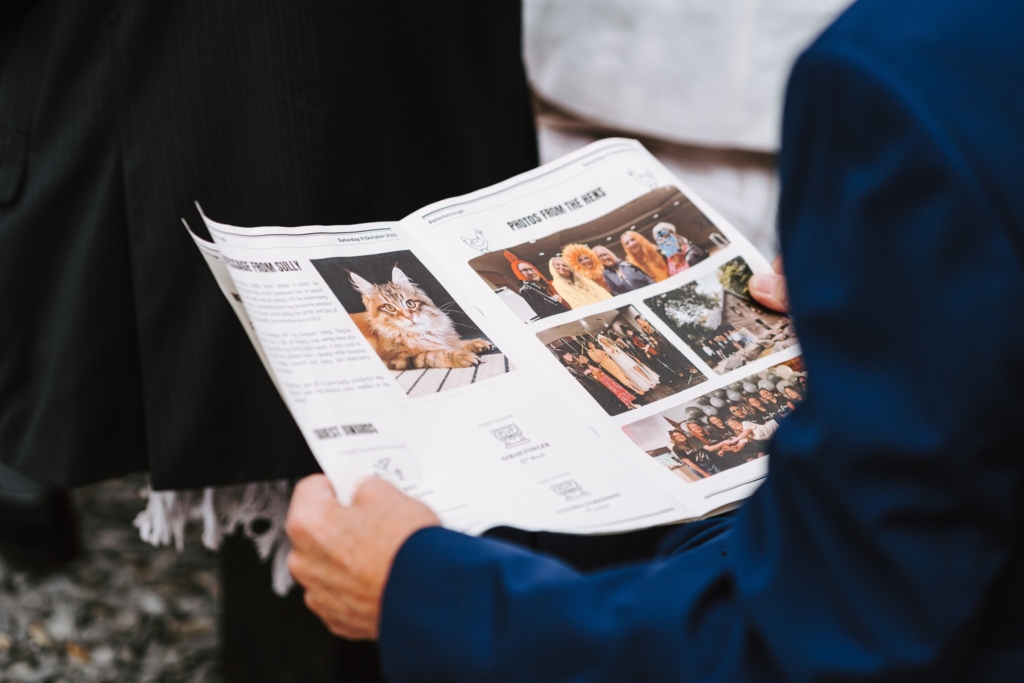
Our wedding newspapers were a popular addition – a nice little nod to my day-to-day work – but also shared a lot of key information in one place; along with a column from our cat, Sully, of course! Rather like school parent newsletters: using the school’s branding to feel authentically ‘them’, with clean and simple formatting, so families quickly grasp key information, amid their busy lives.
Principles to carry forward
Planning a wedding reinforced a few things I’ll continue to carry into my work:
- Consistency builds trust, visually and verbally, without needing explanation.
- Clear values and messages make decision-making easier and outcomes more authentic.
- Stories matter, but they work best when woven in gently, not overexplained.
- Design should support understanding, not compete with it.
- The best communications don’t aim for perfection; they aim to make people feel informed, comfortable, and included.
Much like a wedding, communications succeed when they’re thoughtfully planned, human-centred, and rooted in who you really are – not just how things look on the surface.
